SummitSteel Co., Ltd.

Carbon Steel Plate – Reliable Strength and Versatility for Industrial Applications
Release time:
2025-12-17
Carbon steel plate is a fundamental material widely used across construction, manufacturing, machinery, energy, and infrastructure projects.
Carbon steel plate is a fundamental material widely used across construction, manufacturing, machinery, energy, and infrastructure projects. Designed to deliver strength, durability, and cost efficiency, carbon steel plate provides a dependable solution for applications that demand structural integrity and long-term performance. With balanced mechanical properties and broad processing adaptability, it remains one of the most trusted steel products in global industrial markets.
The overall framework of carbon steel plate focuses on material reliability, processing flexibility, and application versatility. Produced with controlled carbon content, the plate offers an excellent combination of strength and workability. It can be easily cut, welded, formed, and machined, allowing manufacturers and contractors to integrate it smoothly into various production processes. From light fabrication to heavy structural use, carbon steel plate supports a wide range of engineering requirements.
One of the major advantages of carbon steel plate is its strong load-bearing capacity and stable mechanical performance. Compared with many alternative materials, it provides higher strength at a competitive cost, making it ideal for large-scale projects where budget control is critical. The material performs well under pressure, impact, and varying environmental conditions, ensuring consistent results in demanding applications.
Carbon steel plate plays an essential role in structural and functional applications. It is commonly used in building frameworks, bridges, shipbuilding, storage tanks, pressure vessels, industrial equipment, and automotive components. Its versatility allows it to serve both as a primary structural material and as a supporting component in complex assemblies. Surface treatments such as painting, coating, or galvanizing can further enhance corrosion resistance and extend service life.
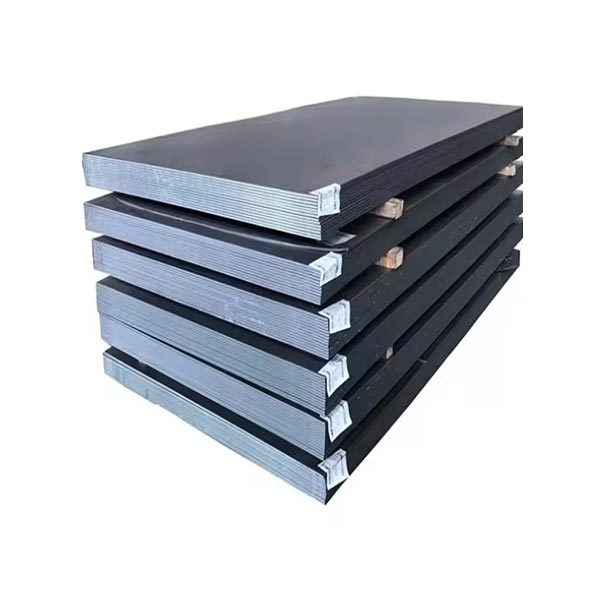
From a customer perspective, carbon steel plate effectively addresses common industry pain points. Many customers face challenges such as high material costs, inconsistent quality, limited availability, or poor processing performance. Carbon steel plate offers a practical solution by delivering stable quality, predictable mechanical properties, and reliable supply. Its ease of fabrication reduces processing time and labor costs, helping customers improve overall production efficiency.
In real-world application cases, construction companies rely on carbon steel plate for beams, columns, and load-bearing structures due to its proven strength and safety performance. Manufacturing plants use it to produce machinery frames and components that require precision and durability. In the energy and transportation sectors, carbon steel plate is widely applied in pipelines, platforms, and heavy-duty equipment, where long-term reliability is essential.
Overall, carbon steel plate is more than just a raw material; it is a strategic choice for industries seeking strength, versatility, and cost control. By choosing high-quality carbon steel plate, customers gain a dependable material that simplifies fabrication, reduces project risks, and supports long-term operational success across diverse applications.
Latest News
Application fields of stainless steel plate
Stainless steel plate is a kind of steel with an oxide film, which can resist the corrosion of most atmospheres, water and acid-base media. Therefore, stainless steel plates are widely used in many fields. The following are several main application directions of stainless steel plates.
2025-07-21
What are the commonly used carbon steel?
The carbon content of 1095 high carbon steel is 0.95%~1.03%. After heat treatment, the hardness can be processed to a high hardness of 57-60HRC, and the toughness is also good.
2025-07-10
Production process of galvanized sheet
Galvanized sheet is a metal material that coats the surface of ordinary carbon steel with a layer of zinc. Its main function is to prevent the steel from being oxidized and corroded during use and prolong the service life. The following is the production process of galvanized sheet.
2025-06-29
Performance characteristics of rebar
Tensile strength: Rebar must have high tensile strength to resist the forces that may act upon it, such as tension and bending during construction or seismic events.
2025-06-18
What is the main use of steel angle bar?
Steel angle bar, also known as angle iron bar or steel lintel is a versalle and widely used material in the construction and manufacturing industries. It is made from several types of steel.,and is avalable in different sizes and thicknesses to suit a wide range of applications.
2025-06-06
I-Beam vs H-Beam: What İs the Difference?
H-Beams Cost Less Than I-Beams For The Same Amount of Structural Support. H beams and I beams are two different types of structural steel members that are commonly used in construction. The distinguishing feature between them is their shape. An H beam is shaped like the letter “H” with one vertical flange and two long-side flanges, whereas an I beam has a cross-section that resembles the letter “I” with a single vertical web or web thickest at mid-span, two webs, and no bottom flange.
2025-06-01
Copyright 2025 : SummitSteel Co., Ltd. Powered by:CEglobal SEO BUSINESS LICENSE
