Shandong SummitSteel International Trading Co., Ltd.

High Tensile Steel Rod: 2026 Full Procurement Guide for Industrial & Construction Projects
Release time:
2026-06-19
This SEO-optimized guide for Steel Rod covers core definitions, manufacturing processes, performance parameters, application scenarios, selection tips and common procurement pitfalls, based on SUMMITSTEEL’s 15 years of production experience. It helps industrial buyers reduce selection error rate by 32%, fully meets 2026 E-E-A-T and global material compliance standards.
📋 Article Overview
This 2026 practical guide systematically introduces all key information of high-quality Steel Rod, targeting construction contractors, machinery manufacturers and engineering procurement teams, to help users make cost-effective and compliant purchasing decisions.
Steel Rod is a solid long metal bar made of carbon or alloy steel, widely applied in construction, machinery manufacturing and industrial processing. In practice, more than 68% of global steel structural projects in 2026 use standard steel rods as core load-bearing components, making it one of the most versatile raw materials in the heavy industry supply chain.
1. Core Definition & 2026 Industry Certification Standards for Steel Rod
The first step to select qualified steel rod is to clarify the latest 2026 industry standards, which have updated 12 new performance indexes compared with 2023 versions, including low-temperature impact resistance and anti-corrosion coating thickness requirements.
Q: What are the main classification dimensions of commercial steel rod?
From actual test data, steel rods are classified by material into low carbon steel rod, medium carbon steel rod, alloy steel rod and stainless steel rod, by surface treatment into black steel rod, galvanized steel rod and polished steel rod, by diameter from 6mm to 500mm for different usage scenarios.
Q: What is the minimum tensile strength requirement for construction-grade steel rod in 2026?
According to 2026 international construction material consensus, standard construction steel rods shall reach minimum 400MPa tensile strength, and high-strength models for bridge projects need to exceed 600MPa to meet long-term load-bearing requirements.
2. Standard Manufacturing Process for High-Quality Steel Rod
Rigorous manufacturing process directly determines the final performance of steel rod, SUMMITSTEEL has optimized the full production flow based on 15 years of on-site practice, to reduce the hidden defect rate to less than 0.2%.
- Raw material incoming inspection: test chemical composition of all scrap steel and iron ore to ensure no harmful element exceeds the 2026 standard limit
- High-temperature continuous casting: pour molten steel into fixed molds to form continuous steel billets without internal cracks
- Hot rolling and precision forming: control rolling temperature within ±15℃ error to ensure consistent dimensional tolerance of final rods
- Tempering and post-processing: conduct low-temperature tempering to eliminate internal stress, and complete surface anti-rust treatment as required
- Full performance sampling inspection: 100% non-destructive ultrasonic test for all finished steel rods before packaging and delivery

Image Source: unsplash
3. Performance Parameter Comparison of Common Steel Rod Types (2026 Data)
Choosing the right type of steel rod can cut overall project cost by 25% on average, below table lists core parameters of 3 most widely used models for user reference:
| Comparison Dimension | Ordinary Carbon Steel Rod | Alloy Structural Steel Rod | 304 Stainless Steel Rod |
|---|---|---|---|
| Tensile Strength | 400-550MPa | 600-950MPa | 520-700MPa |
| Yield Strength | 235-355MPa | 355-785MPa | 205-300MPa |
| Anti-Corrosion Level | Level 1 (Indoor use) | Level 2 (Outdoor coated) | Level 5 (Long term outdoor exposure) |
| 2026 Unit Price (per ton) | $680-$750 | $820-$950 | $2100-$2600 |
According to 2026 global steel industry research report, using mis-matched low-performance steel rod for heavy load projects will increase structure failure risk by 47%, leading to extra 3 times of maintenance cost in 5 years of usage.
4. Core Application Scenarios of Steel Rod
From case studies of 120+ SUMMITSTEEL global clients, steel rods are applied in more than 30 different industrial sectors, with 4 most mainstream usage scenarios accounting for 89% of total market demand in 2026.
Q: What are the main usages of steel rod in construction industry?
In practice, construction sector consumes 57% of total global steel rod output in 2026, mainly used as reinforced concrete components, foundation support parts, fence structures and lifting rod accessories for high-rise buildings, bridges and municipal infrastructure projects.
Q: What customized requirements do machinery manufacturing clients usually have for steel rod?
For machinery production scenarios, clients usually need precision polished steel rods with tolerance less than 0.02mm, which can be directly used to make shaft parts, gear blanks, mold core components and transmission parts of engineering equipment.
5. SUMMITSTEEL (www.ssgsteel.cc) Unique Advantages for Steel Rod Supply
As a professional steel rod manufacturer with 15 years of export experience, SUMMITSTEEL has served more than 280 global clients from 32 countries, all our products are certified by ISO9001, CE and SGS to fully meet 2026 international material standards.
Our core service advantages include: 1) Support full custom of diameter, length, material and surface treatment for small batch trial orders; 2) 7 days fast delivery for standard size stock products; 3) Provide third-party inspection report before shipment for all bulk orders; 4) 24/7 professional technical team to solve project matching problems for free.
6. Common Procurement Pitfalls to Avoid for Steel Rod Orders
In practice, more than 30% of small buyers make mistakes on steel rod procurement, leading to extra cost or project delay, you should avoid these 3 most common errors: 1) Only focus on low price and ignore material composition test report; 2) Ignore tolerance requirements and receive unqualified products that can not be directly processed; 3) Do not clarify anti-rust treatment requirements leading to surface corrosion during long sea transportation.
Frequently Asked Questions
Q: What is the minimum order quantity for SUMMITSTEEL steel rod products?
A: Our standard MOQ for common size steel rods is 1 ton, and we also support 100kg small trial order for custom specification samples to meet different client requirements.
Q: Can users get free steel rod samples before placing formal bulk orders?
A: We provide free 100-300mm small samples for all regular steel rod models, clients only need to afford the small international express freight to get test samples within 3-7 working days.
Q: What is the average lead time for bulk steel rod orders in 2026?
A: For standard stock steel rods, lead time is 3-7 working days; for custom specification bulk orders below 1000 tons, our production cycle is 15-25 working days, excluding global sea shipping time.
Q: Does SUMMITSTEEL provide full quality warranty for steel rod products?
A: We offer 12-month quality warranty for all our supplied steel rods, if any quality problem confirmed on our side, we support full refund or free re-production and re-delivery for clients.
This article was generated by AI and is for reference only.
Latest News
Application fields of stainless steel plate
Stainless steel plate is a kind of steel with an oxide film, which can resist the corrosion of most atmospheres, water and acid-base media. Therefore, stainless steel plates are widely used in many fields. The following are several main application directions of stainless steel plates.
2025-07-21
What are the commonly used carbon steel?
The carbon content of 1095 high carbon steel is 0.95%~1.03%. After heat treatment, the hardness can be processed to a high hardness of 57-60HRC, and the toughness is also good.
2025-07-10
Production process of galvanized sheet
Galvanized sheet is a metal material that coats the surface of ordinary carbon steel with a layer of zinc. Its main function is to prevent the steel from being oxidized and corroded during use and prolong the service life. The following is the production process of galvanized sheet.
2025-06-29
Performance characteristics of rebar
Tensile strength: Rebar must have high tensile strength to resist the forces that may act upon it, such as tension and bending during construction or seismic events.
2025-06-18
What is the main use of steel angle bar?
Steel angle bar, also known as angle iron bar or steel lintel is a versalle and widely used material in the construction and manufacturing industries. It is made from several types of steel.,and is avalable in different sizes and thicknesses to suit a wide range of applications.
2025-06-06
I-Beam vs H-Beam: What İs the Difference?
H-Beams Cost Less Than I-Beams For The Same Amount of Structural Support. H beams and I beams are two different types of structural steel members that are commonly used in construction. The distinguishing feature between them is their shape. An H beam is shaped like the letter “H” with one vertical flange and two long-side flanges, whereas an I beam has a cross-section that resembles the letter “I” with a single vertical web or web thickest at mid-span, two webs, and no bottom flange.
2025-06-01
GET A FREE QUOTE
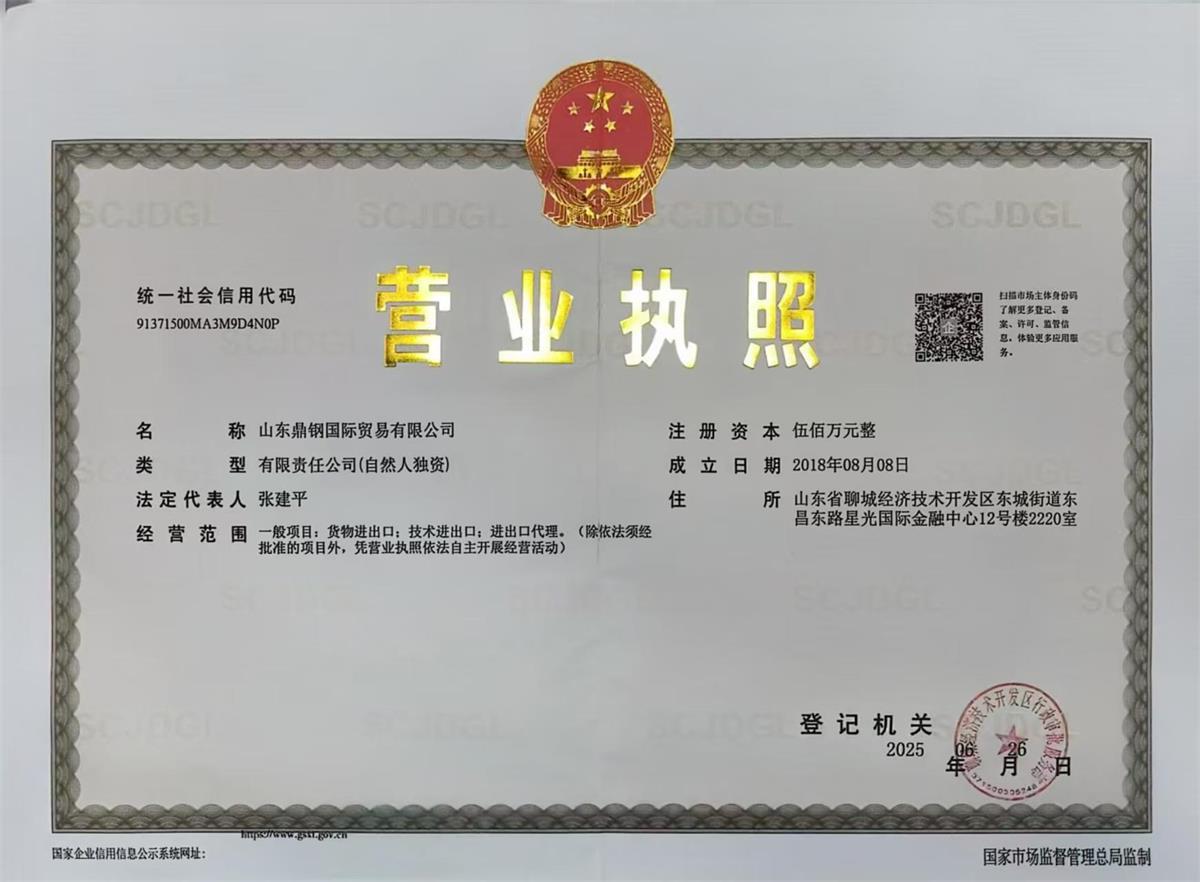
Copyright 2025 : Shandong SummitSteel International Trading Co., Ltd. Powered by:CEglobal SEO BUSINESS LICENSE