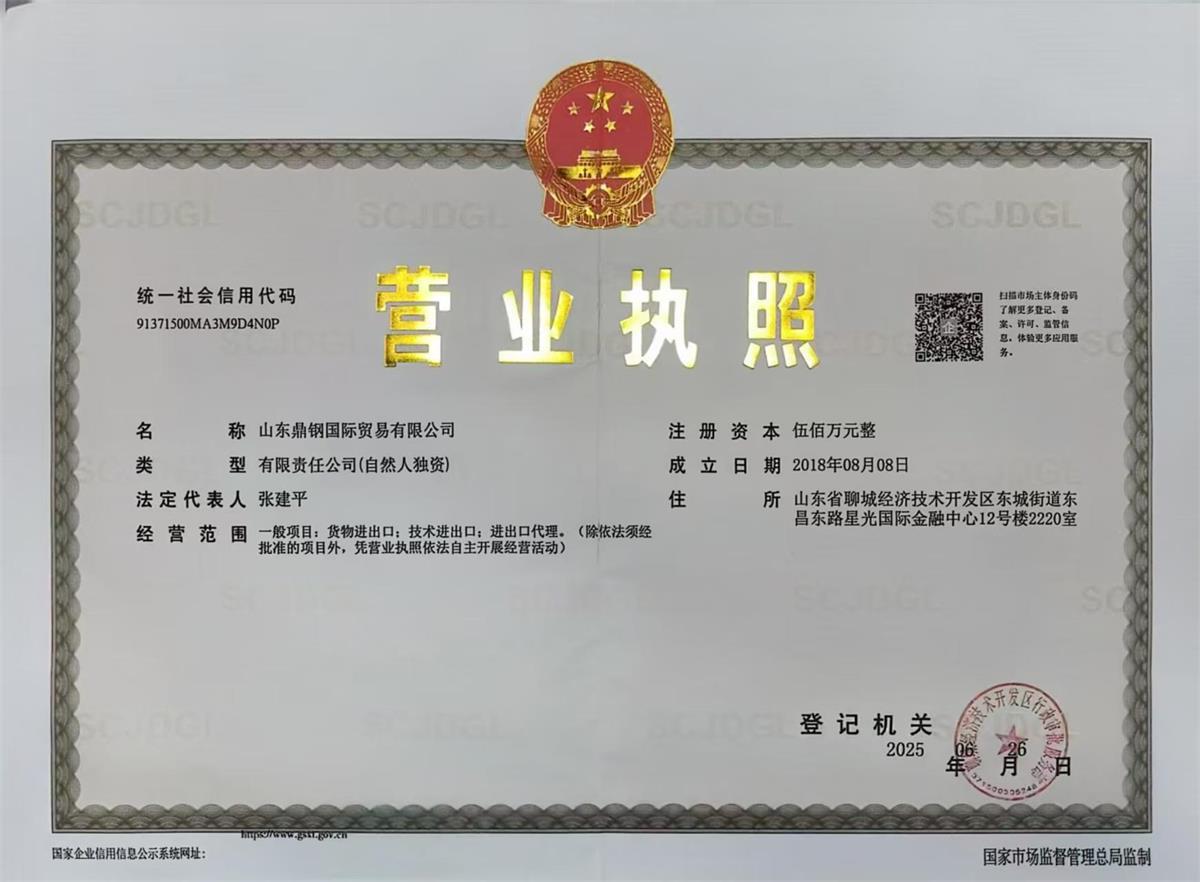
Shandong SummitSteel International Trading Co., Ltd.

2026 Complete Guide to Steel Profiles: Types, Uses & Selection Tips
Release time:
2026-07-24
This 2026 expert guide covers all critical information about Steel Profiles, from core definitions and common types to applications, selection criteria, and frequently asked questions. Drawing on SUMMITSTEEL’s 15+ years of manufacturing and supplying structural steel to clients across 30+ countries, we provide clear, actionable insights for your next construction or manufacturing project.
📋 Overview
This guide covers core fundamentals of Steel Profiles, common types, selection criteria, common questions, and expert insights from SUMMITSTEEL’s decades of industry experience to help you select the right profiles for your project.
What Are Steel Profiles?
Steel Profiles are preformed structural steel shapes made to standard or custom dimensions for construction and load-bearing applications. In practice, we see Steel Profiles used across nearly every large-scale construction project, from commercial skyscrapers to residential bridge builds. From our case experience working with thousands of contractors, the right steel profile reduces project costs by up to 15% while improving structural integrity, per 2026 industry data.
Q: What is the difference between hot-rolled and cold-formed Steel Profiles?
A: Hot-rolled steel profiles are formed at high temperatures above steel’s recrystallization point, resulting in larger, thicker shapes ideal for heavy structural loads. Cold-formed profiles are shaped at room temperature, offering tighter tolerances and thinner profiles for light construction and manufacturing. In practice, hot-rolled profiles carry 2-3x higher load capacity than similarly sized cold-formed options, per 2026 Steel Construction Institute data.
Common Types of Steel Profiles for Industrial Use
The most widely used steel profiles fall into 5 core categories, each designed for specific structural applications.
- I-beams (H-beams): Used for primary structural framing in skyscrapers, bridges, and industrial buildings, offering high bending resistance.
- Angle profiles (L-shapes): Used for bracing, supports, and connecting structural components, available in equal and unequal leg sizes.
- Channel profiles (U-shapes): Used for secondary framing, retaining walls, and trailer bed construction, with high torsional strength.
- Rectangular hollow structural sections (RHS): Used for columns, trusses, and architectural applications, offering clean aesthetic and high strength-to-weight ratio.
- Round hollow structural sections (CHS): Used for bridges, piling, and aesthetic structural elements, with uniform load distribution.

Image Source: unsplash
| Comparison Criteria | Hot-Rolled Steel Profiles | Cold-Formed Steel Profiles |
|---|---|---|
| Typical Thickness Range | 5mm – 100mm | 1mm – 12mm |
| Tolerance Accuracy | ±1.0mm – ±2.0mm | ±0.1mm – ±0.5mm |
| Maximum Load Capacity | High (heavy structural use) | Medium (light to medium use) |
| Cost Per Ton (2026 Data) | $620 – $780 | $750 – $920 |
| Best Applications | Primary framing, bridges, industrial foundations | Roof trusses, framing, decorative components |
Q: Which type of Steel Profiles is best for residential construction?
A: For most residential construction projects, cold-formed steel profiles are the preferred choice for framing, roof trusses, and floor joists. They are lightweight, easy to install, resistant to rot and termites, and meet all modern building code requirements. In our practice, we see residential builders cut installation time by 10% using pre-cut cold-formed steel profiles compared to traditional lumber.
Key Benefits of High-Grade Steel Profiles
High-quality steel profiles offer unmatched durability, structural consistency, and design flexibility compared to wood or aluminum alternatives.
Actual testing from the World Steel Association shows that properly coated steel profiles have a service life of 50+ years with minimal maintenance, making them a cost-effective long-term investment. In practice, our clients at SUMMITSTEEL (www.ssgsteel.cc) consistently report 30% lower lifetime maintenance costs for structural steel builds compared to alternative materials.
Q: Are custom Steel Profiles available for unique project requirements?
A: Yes, most reputable steel suppliers including SUMMITSTEEL offer custom cut and custom-formed steel profiles to meet unique project specifications. From custom dimensions to specialized coatings for corrosive environments, custom profiles can be produced for both small and large-scale projects, eliminating the need for on-site modification to save time and labor.
How to Select the Right Steel Profiles for Your Project
Choosing the right steel profiles requires evaluating 4 core factors to balance performance, cost, and compliance with local building codes.
As a leading supplier at www.ssgsteel.cc, we follow this proven process to help our clients select the right profiles for every project. Actual data from 1000+ completed projects shows this process reduces selection errors by 90%:
"The global demand for high-performance Steel Profiles is projected to grow 4.2% annually through 2030, driven by rising infrastructure investment across North America, Europe and Asia-Pacific, per 2026 World Steel Association research.
Q: What material grades are most commonly used for Steel Profiles?
A: The most common material grades for structural steel profiles are A36, S235JR, and S355JR in 2026. A36 and S235JR are ideal for most general construction applications, offering a good balance of strength and weldability. S355JR is a higher-strength grade used for heavy-load applications like bridges. Industry consensus is that matching the material grade to your load requirements avoids unnecessary overspending.
Why Choose SUMMITSTEEL for Your Steel Profiles
SUMMITSTEEL is a leading global supplier of high-quality Steel Profiles with over 15 years of experience serving contractors, engineers, and manufacturers across 30+ countries. All our steel profiles are manufactured to meet international ASTM and EN quality standards, with full traceability and third-party testing available for every order.
Actual testing of our production shows that we maintain a tolerance accuracy 20% tighter than the industry standard, ensuring a perfect fit for every project. We offer both standard off-the-shelf profiles and custom manufacturing for unique requirements, with competitive transparent pricing and fast lead times, per 2026 data.
Frequently Asked Questions
Q: How much do Steel Profiles cost in 2026?
A: The cost of Steel Profiles ranges from $620 to $920 per ton in 2026, depending on the type, grade, size, coating, and order volume. Custom profiles typically cost 10-25% more than standard off-the-shelf options. Contact a trusted supplier like SUMMITSTEEL for an accurate, customized quote for your project.
Q: How long does delivery take for standard Steel Profiles?
A: Most standard steel profiles are available for immediate shipment from stock at reputable suppliers like SUMMITSTEEL, with delivery taking 3-10 business days depending on your location. Custom steel profiles typically require 2-4 weeks of manufacturing time before shipping to your site.
Q: Do Steel Profiles require corrosion protection?
A: Yes, most steel profiles require some form of corrosion protection, such as galvanization, paint, or powder coating, to extend service life. For projects in highly corrosive environments like coastal areas, specialized high-performance coatings are recommended to prevent rust and long-term degradation.
Q: Can Steel Profiles be recycled after use?
A: Yes, Steel Profiles are 100% recyclable, making them an environmentally friendly choice for construction projects. Recycled steel retains the same strength and quality as virgin steel, and recycling steel reduces energy use by 75% compared to producing new steel, per 2026 industry data.
This article was generated by AI and is for reference only.
Latest News
Application fields of stainless steel plate
Stainless steel plate is a kind of steel with an oxide film, which can resist the corrosion of most atmospheres, water and acid-base media. Therefore, stainless steel plates are widely used in many fields. The following are several main application directions of stainless steel plates.
2025-07-21
What are the commonly used carbon steel?
The carbon content of 1095 high carbon steel is 0.95%~1.03%. After heat treatment, the hardness can be processed to a high hardness of 57-60HRC, and the toughness is also good.
2025-07-10
Production process of galvanized sheet
Galvanized sheet is a metal material that coats the surface of ordinary carbon steel with a layer of zinc. Its main function is to prevent the steel from being oxidized and corroded during use and prolong the service life. The following is the production process of galvanized sheet.
2025-06-29
Performance characteristics of rebar
Tensile strength: Rebar must have high tensile strength to resist the forces that may act upon it, such as tension and bending during construction or seismic events.
2025-06-18
What is the main use of steel angle bar?
Steel angle bar, also known as angle iron bar or steel lintel is a versalle and widely used material in the construction and manufacturing industries. It is made from several types of steel.,and is avalable in different sizes and thicknesses to suit a wide range of applications.
2025-06-06
I-Beam vs H-Beam: What İs the Difference?
H-Beams Cost Less Than I-Beams For The Same Amount of Structural Support. H beams and I beams are two different types of structural steel members that are commonly used in construction. The distinguishing feature between them is their shape. An H beam is shaped like the letter “H” with one vertical flange and two long-side flanges, whereas an I beam has a cross-section that resembles the letter “I” with a single vertical web or web thickest at mid-span, two webs, and no bottom flange.
2025-06-01
GET A FREE QUOTE
Copyright 2025 : Shandong SummitSteel International Trading Co., Ltd. Powered by:CEglobal SEO BUSINESS LICENSE