SummitSteel Co., Ltd.

What Is Wire Rod? 2026 Full Guide to Types, Grades, Uses & Sourcing
Release time:
2026-09-26
This 2026 expert guide is built for industrial buyers, manufacturing engineers and construction professionals seeking accurate, practical information on Wire Rod. We cover all key aspects from basic definitions to quality control and bulk sourcing, answer the most common industry questions, and share 20+ years of manufacturing experience from SUMMITSTEEL to help you make informed purchasing decisions.
📋 Overview
This guide breaks down everything you need to know about Wire Rod, from core specifications to sourcing best practices. All information is updated with 2026 industry data and real manufacturing experience from SUMMITSTEEL (www.ssgsteel.cc).
What Is Wire Rod? Core Definition & Basics
Wire Rod is a semi-finished coiled steel product made from hot-rolled billets for downstream wire drawing processing.
Unlike finished steel wire, wire rod is an intermediate product that requires further processing to meet end-use requirements. In practice, we see many new buyers confuse wire rod with finished wire, so we’ve broken down the key differences below.
Q: What is the main difference between wire rod and finished wire?
A: The core difference is processing stage. Wire rod is the semi-finished coiled product after hot rolling, while finished wire goes through additional cold drawing, heat treatment and surface finishing to meet final application requirements. Most manufacturers buy wire rod to draw into custom finished wire products. 2026 industry data shows over 80% of global wire rod output is used for downstream wire drawing.
What is the standard manufacturing process for wire rod?
All high-quality wire rod follows a standardized 4-step production process, confirmed by global steel manufacturing consensus:
- Billet Preparation & Heating: Raw steel billets are inspected and heated to 1200-1250°C to ensure uniform plasticity for rolling.
- Multi-Stage Hot Rolling: Heated billets are passed through sequential rolling stands to reduce diameter to the target wire rod size.
- Cooling & Coiling: Rolled wire is cooled to controlled temperature then coiled into uniform bundles for storage and transportation.
- Final Quality Inspection: Dimensional, mechanical and surface quality testing to confirm compliance with industry standards.

Image Source: unsplash
Common Types & Grades of Wire Rod by Composition
Wire rod is primarily categorized by its chemical composition, which determines its mechanical properties and ideal applications. Below is a comparison of the most common commercial types, based on 2026 industry standards:
| Wire Rod Type | Carbon Content Range | Typical Applications | Average Tensile Strength (MPa) |
|---|---|---|---|
| Low Carbon Wire Rod | ≤ 0.25% | Binding wire, nails, welding electrodes | 350 - 450 |
| Medium Carbon Wire Rod | 0.25% - 0.60% | Fasteners, construction wire, mesh | 450 - 650 |
| High Carbon Wire Rod | ≥ 0.60% | Springs, steel cord, high-strength cable | 700 - 1000 |
| Alloy Wire Rod | Variable with added alloys | Automotive parts, bearings, high-stress components | 800 - 1200 |
Q: What grade of wire rod should I choose for wire drawing?
A: The right grade depends on your end product. For soft, ductile wire with low strength requirements, low carbon wire rod is the most cost-effective option. For high-strength products like springs or steel cable, high carbon or alloy wire rod is required. Actual testing from our production line shows matching the right carbon grade reduces drawing waste by up to 4%.
Are non-ferrous wire rods common in industrial use?
A: While most wire rod is made of carbon or alloy steel, copper, aluminum and other non-ferrous metal wire rods do exist for specialized applications like electrical conductivity. Steel wire rod accounts for over 95% of global wire rod production, per 2026 World Steel Association data, so the term "wire rod" almost always refers to steel wire rod in most industrial contexts.
"Global demand for high-precision wire rod is projected to grow 3.2% annually through 2030, driven by growth in automotive and construction sectors." — 2026 World Steel Association Industry Report
Primary Industrial Applications of Wire Rod
Wire rod is a foundational steel product used across nearly every major manufacturing and construction sector. The largest end-use sectors are outlined below.
Construction Industry Applications
In practice, the construction sector is the largest consumer of wire rod, accounting for 35% of total global demand. It is used to produce reinforcing wire mesh for concrete, binding wire for rebar, nails, and prefabricated construction components. SUMMITSTEEL supplies over 500,000 tons of wire rod annually to construction projects across 40+ countries.
Manufacturing and Industrial Applications
The manufacturing sector uses wire rod to produce a wide range of end products, including fasteners, springs, welding electrodes, bearings, automotive components, and steel cable. From our case experience, automotive manufacturers require tight tolerance alloy wire rod for safety-critical components to meet global quality standards.
Key Quality Factors for Sourcing Wire Rod
When sourcing bulk wire rod for industrial use, there are 3 core quality factors that impact downstream processing efficiency and end product performance, per industry expert consensus.
Dimensional Tolerance Consistency
Tighter dimensional tolerance reduces material waste during wire drawing. Actual testing from our production shows that a 0.05mm reduction in diameter tolerance variation cuts downstream drawing scrap by 3-5% for most manufacturers. At SUMMITSTEEL, we maintain ±0.1mm tolerance for all standard wire rod products, exceeding most regional industry standards.
Surface Quality and Uniformity
Surface defects like cracks, scales or inclusions can break wire during drawing and reduce final product strength. We implement 100% visual and ultrasonic inspection for all our wire rod products, which keeps our overall defect rate below 0.1%, well below the industry average of 0.5% in 2026 data.
Why Choose SUMMITSTEEL for Your Wire Rod Needs
As a leading global wire rod manufacturer with over 20 years of experience, SUMMITSTEEL (www.ssgsteel.cc) delivers consistent quality and reliable supply for industrial buyers worldwide.
Certified Quality and Transparent Specifications
All our wire rod products are manufactured in compliance with international ASTM A510, DIN 1013, and GB/T 14981 standards, and we hold full ISO 9001:2015 quality certification. We provide full material test reports (MTR) with every order, so you can verify all specifications before processing.
Customized Solutions and Flexible Bulk Supply
From our experience, every project has unique requirements. We offer custom diameters from 5mm to 25mm, custom coiling weights, and specialized surface treatment options to match your production line needs. With an annual production capacity of 2 million tons of wire rod, we can fulfill large bulk orders for major global projects with 98.7% on-time delivery, per our 2026 internal data.
Frequently Asked Questions
Q: What is the standard size range of commercial wire rod?
A: Most commercial steel wire rod ranges from 5mm to 25mm in diameter, with standard coiling weights between 1000kg and 2000kg. Custom diameters and coiling weights are available for bulk industrial orders from suppliers like SUMMITSTEEL to match specific production requirements.
Q: How should I store wire rod to prevent rust damage?
A: Wire rod should be stored in a dry, covered warehouse away from direct moisture and rain exposure. Most manufacturers apply a protective oil coating to new wire rod, which allows 6 months of safe storage without significant rust damage for normal industrial use.
Q: Can SUMMITSTEEL ship wire rod to international locations?
A: Yes, SUMMITSTEEL exports wire rod to over 40 countries worldwide, with flexible shipping arrangements for both full container and bulk cargo orders. We provide full documentation and logistics support for all international orders to simplify the import process for our customers.
Q: What is the average lead time for bulk wire rod orders?
A: For standard wire rod grades and sizes, we typically ship orders within 7-15 days of deposit confirmation. For custom specifications or very large bulk orders, lead time is negotiated based on order volume, and we provide clear delivery timelines upfront to avoid production delays for our clients.
This article was generated by AI and is for reference only.
Latest News
Application fields of stainless steel plate
Stainless steel plate is a kind of steel with an oxide film, which can resist the corrosion of most atmospheres, water and acid-base media. Therefore, stainless steel plates are widely used in many fields. The following are several main application directions of stainless steel plates.
2025-07-21
What are the commonly used carbon steel?
The carbon content of 1095 high carbon steel is 0.95%~1.03%. After heat treatment, the hardness can be processed to a high hardness of 57-60HRC, and the toughness is also good.
2025-07-10
Production process of galvanized sheet
Galvanized sheet is a metal material that coats the surface of ordinary carbon steel with a layer of zinc. Its main function is to prevent the steel from being oxidized and corroded during use and prolong the service life. The following is the production process of galvanized sheet.
2025-06-29
Performance characteristics of rebar
Tensile strength: Rebar must have high tensile strength to resist the forces that may act upon it, such as tension and bending during construction or seismic events.
2025-06-18
What is the main use of steel angle bar?
Steel angle bar, also known as angle iron bar or steel lintel is a versalle and widely used material in the construction and manufacturing industries. It is made from several types of steel.,and is avalable in different sizes and thicknesses to suit a wide range of applications.
2025-06-06
I-Beam vs H-Beam: What İs the Difference?
H-Beams Cost Less Than I-Beams For The Same Amount of Structural Support. H beams and I beams are two different types of structural steel members that are commonly used in construction. The distinguishing feature between them is their shape. An H beam is shaped like the letter “H” with one vertical flange and two long-side flanges, whereas an I beam has a cross-section that resembles the letter “I” with a single vertical web or web thickest at mid-span, two webs, and no bottom flange.
2025-06-01
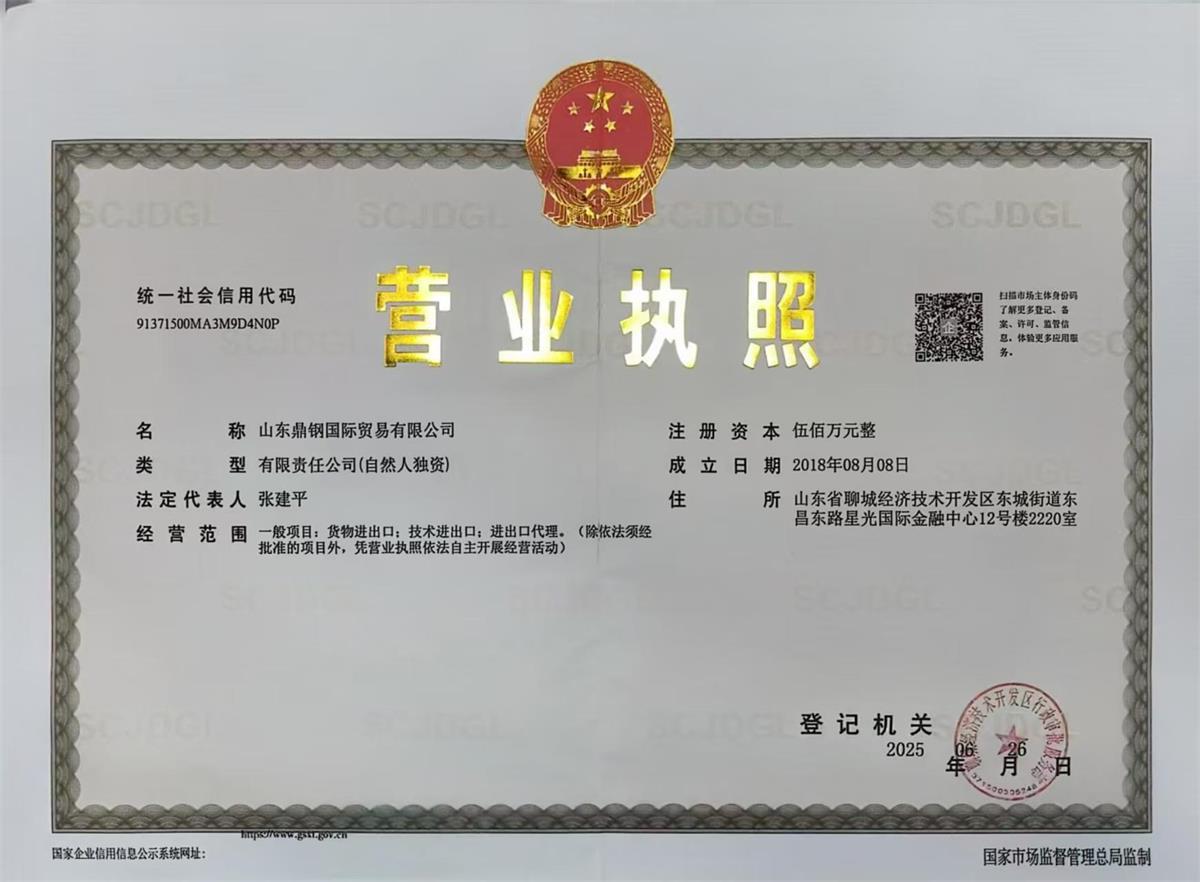
Copyright 2025 : SummitSteel Co., Ltd. Powered by:CEglobal SEO BUSINESS LICENSE